
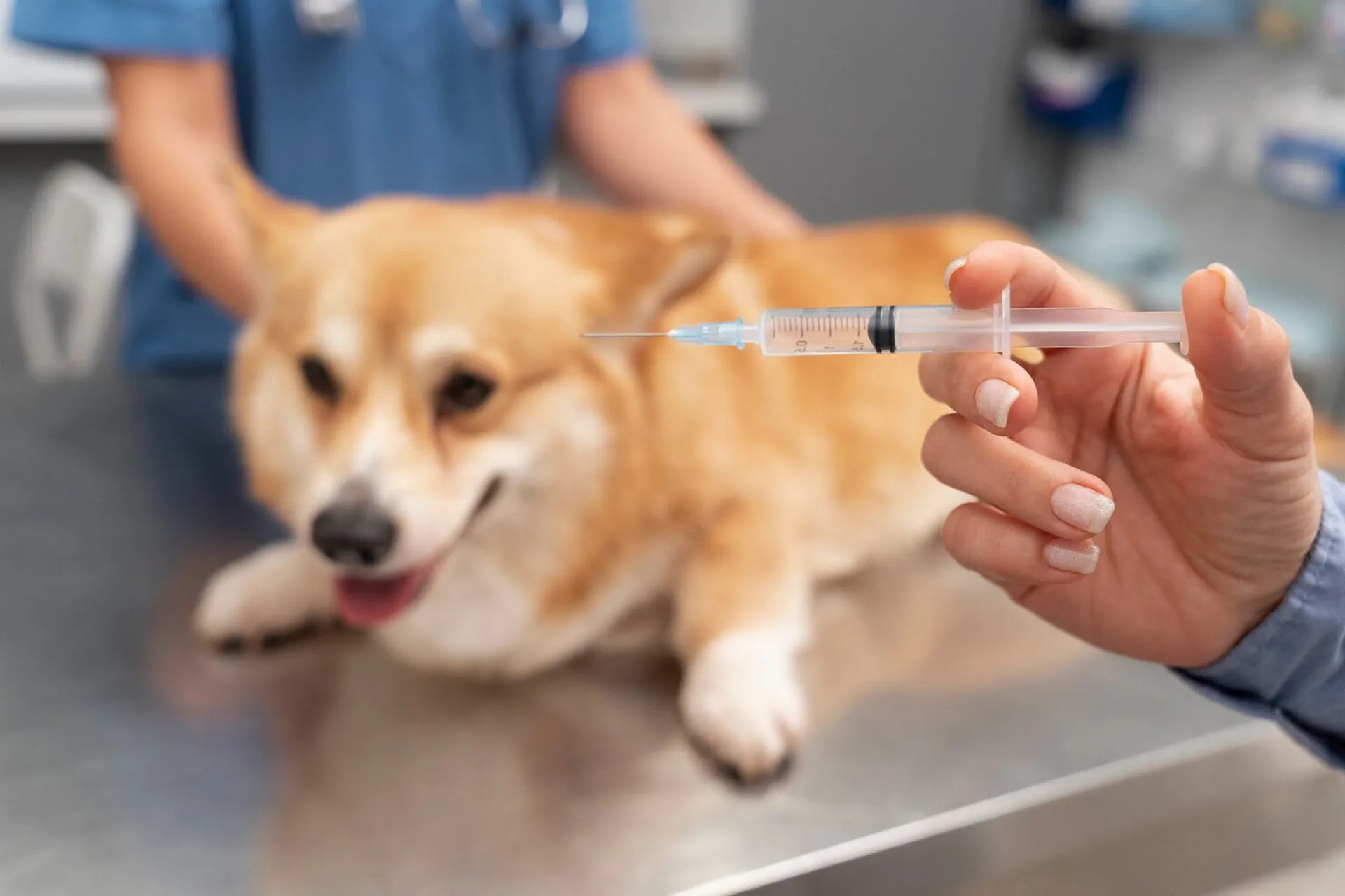
Bringing home a new puppy or kitten is one of the best feelings there is, and one of the first things on your to-do list should be a vaccination plan. Vaccines are one of the simplest, most effective ways to protect your pet from serious, preventable diseases. At Skaer Veterinary Clinic, we get a lot of good questions about timing, frequency, and safety, so let’s walk through the essentials for Wichita pet owners.
When should a puppy or kitten start vaccines?
We recommend beginning vaccinations at 6 to 8 weeks of age. There’s a specific reason it isn’t earlier, and it’s a neat piece of biology. Newborns receive maternal antibodies through their mother’s milk, and those antibodies protect them in their first weeks of life. The catch is that those same antibodies also interfere with vaccines, making them ineffective if given too soon. Around 6 to 8 weeks, puppies and kittens begin to lose that maternal protection, which is exactly when vaccines start to do their job.
How often does my pet need vaccines?
During the puppy and kitten stage, vaccines are given as a series, typically every 3 to 4 weeks, then boosted again at one year of age. After that first-year booster, the schedule stretches out:
- Dogs: the distemper/parvo combination is recommended every 3 years in our practice after the one-year booster.
- Cats: the upper respiratory vaccination is likewise recommended every 3 years.
If you grew up thinking pets needed “shots every year,” you’re not alone, but the science has evolved. There’s a large body of evidence in veterinary medicine showing these core vaccines don’t need to be given annually, and we’re always happy to talk it through at your visit.
Rabies vaccinations and local requirements
Rabies is handled a little differently because it’s also a matter of public safety and local law. The initial rabies vaccine is given after your pet reaches 3 to 4 months of age and is boosted one year later to make sure it’s fully effective. After that, adult dogs generally move to a three-year rabies schedule.
Local licensing rules in Wichita and Sedgwick County can change over time and sometimes affect how rabies vaccination and licensing work for adult dogs. Because the details do get updated, we’d rather you not rely on an old rule of thumb. The simplest approach is to let us keep your pet current and confirm the latest local requirements with you at your visit, so your licensing and rabies status always line up.
Cats are a special case worth explaining. We continue to recommend a rabies vaccine for cats every year, but with an important twist. Cats can, very rarely, develop a malignancy called a fibrosarcoma in response to the adjuvants (added chemicals) found in some three-year rabies vaccines. Dogs aren’t prone to this. So to protect our feline patients, we use a non-adjuvanted, one-year rabies vaccine for cats. It’s a small detail that reflects how seriously we take cat-specific safety as a Gold Certified Cat Friendly Practice.
The leptospirosis vaccine for dogs
This is one we’ve been recommending more often, because we’ve seen more cases. Leptospirosis is a bacterial disease that affects the liver and kidneys in dogs and other mammals. Here’s why it deserves your attention: it’s carried mainly by rats, other rodents, and wildlife like raccoons and opossums, and it spreads through their urine. Dogs pick it up from contaminated water and soil, even through damaged or thin skin while swimming.
Importantly, “lepto” is zoonotic, meaning people can catch it too, often from their own pets. Signs in dogs can include extreme lethargy, loss of appetite, vomiting, diarrhea, excessive drinking, and abdominal discomfort, sometimes with a fever. Many of those symptoms overlap with other illnesses, so a dog’s environment and habits help us connect the dots. Treatment is a course of antibiotics with supportive hospital care, and it works best when caught early. Because we’ve seen an increased incidence locally, we strongly recommend the leptospirosis vaccine for our canine patients.
Are there side effects to worry about?
Vaccines are generally very safe, and the protection they provide far outweighs the small risks. Still, we believe in being upfront, so here’s what to watch for. Most reactions are mild and short-lived:
- Mild lethargy, vomiting, or diarrhea
- A small, sometimes tender knot at the injection site
- Small bumps on the skin or a swollen muzzle or face
Severe reactions are rare, but they can be serious when they do happen. If you’re ever concerned about your pet after a vaccine, please call us right away, and we may ask to see them. We’d always rather you check.
Building the right plan for your pet
Every pet is a little different. Their age, lifestyle, travel habits, and whether they board or visit dog parks all shape which vaccines make sense and how often. That’s why we build vaccine plans around the individual animal rather than a one-size-fits-all checklist. Vaccines are also a core part of every wellness exam, where we can review what’s due and answer any questions.
If you’ve just welcomed a new puppy or kitten, or you’re not sure whether your adult pet is up to date, we’d love to help. New to the practice? Our new client page makes that first visit easy, or you can simply call our Wichita clinic to get started.
The Skaer Veterinary Clinic Team