
Veterinary Dentistry
Pet Dental Care in Wichita, KS
Dental health is one of the most overlooked parts of your pet’s overall wellbeing — and one of the most important. By the age of three, the majority of dogs and cats already show signs of dental disease, and most of it happens below the gum line where you simply can’t see it. Left untreated, it causes real pain, tooth loss, and can affect the heart, kidneys, and liver.
At Skaer Veterinary Clinic, we provide thorough, anesthetized dental care for dogs and cats from Wichita, Derby, Bel Aire, Park City, Maize, Haysville, Schulte, and Oatville. Every dental procedure includes full-mouth digital X-rays, individualized anesthesia, dental nerve blocks for pain control, and a careful professional clean above and below the gum line — the standard of care we’d want for our own pets.
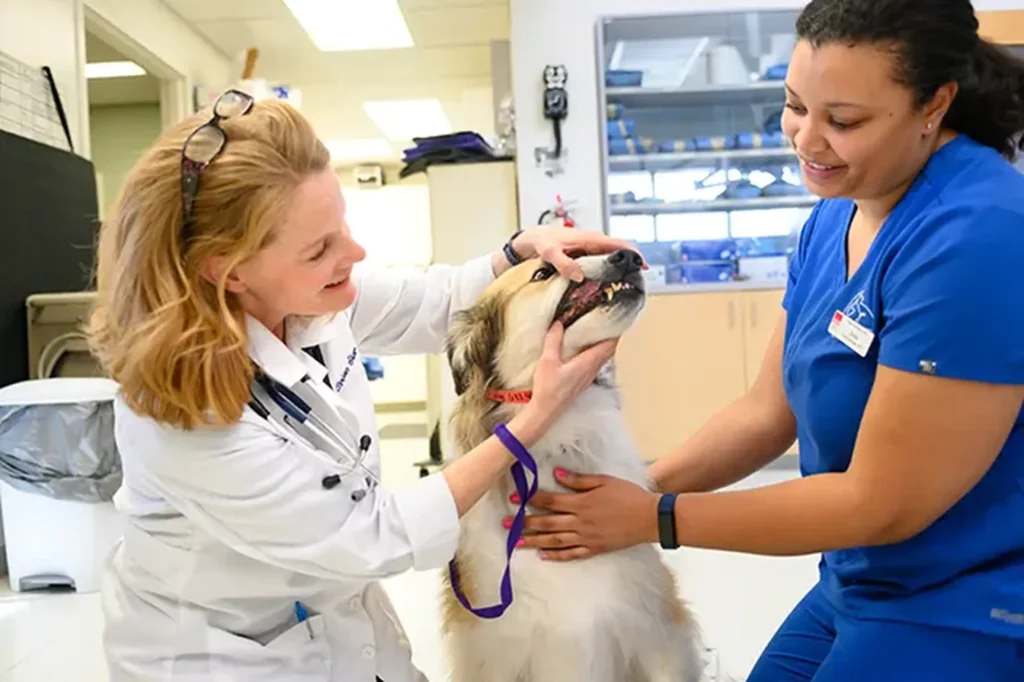
Most Dental Disease Hides Where You Can't See It
Here’s something most people don’t know: over 80% of dental disease in pets happens below the gum line. You can’t see it by looking in your pet’s mouth. Your pet can’t tell you it hurts. And left untreated, it doesn’t just cause pain — it can lead to serious problems with the heart and lungs.
By age three, most dogs and cats already show signs of gum disease. The good news is that with regular dental care, it’s very manageable.
At Skaer Veterinary Clinic, every single dental procedure includes a full-mouth X-ray. Every time, for every patient. That’s the only way to see what’s actually going on beneath the surface.
What a Dental Procedure at Skaer Looks Like
Every dental appointment follows the same careful sequence — from pre-procedure checks through to aftercare guidance at home.
Pre-procedure evaluation
Before any dental procedure, we do a health check and run pre-anesthetic bloodwork. This helps us make sure your pet is healthy enough for the procedure and lets us customize their anesthetic plan.
Full-mouth X-rays
We X-ray every tooth, every time. This lets us see bone loss, root damage, and any disease hiding below the gum line — things that are completely invisible without imaging.
Professional cleaning
We remove tartar buildup above and below the gum line, clean between teeth, probe for pockets, pain, fractures, and polish the surfaces. This is far more thorough than anything that can be done at home.
Pain management
Dental nerve blocks and advanced pain management techniques are used throughout to minimize any discomfort during and after the procedure. Your pet’s comfort is a priority from start to finish.
Treatment of any problems found
If we find diseased teeth, infections, or other issues during the procedure, we address them at the same time.
Recovery and follow-up guidance
We’ll give you clear aftercare instructions and let you know what to watch for at home.
How Often Does My Pet Need a Dental Clean?
It depends on the individual pet. Some need annual cleanings. Some can go a little longer. Smaller breeds and cats tend to build up tartar more quickly. We’ll give you a personalized recommendation at your pet’s wellness visit.
At-home dental care — like brushing and dental chews and many other options that we can help you with — can help slow tartar buildup between professional cleanings, but it doesn’t replace the professional clean. We can show you how to brush your pet’s teeth if you’d like to give it a try.
Dental Care Questions Answered
Is my pet safe under anesthesia for a dental procedure?
While no anesthetic procedure can ever be 100% risk-free, we take every possible precaution to make it as safe as possible. Every anesthetic plan is tailored to your pet’s age, weight, health, and medical history. A dedicated team member monitors your pet throughout the procedure using advanced monitoring equipment, allowing us to respond immediately if needed. These measures help minimize risks and ensure the safest care possible.
How do I know if my pet has tooth pain?
Often, you won’t — pets are very good at hiding discomfort. Signs to watch for include bad breath, dropping food, chewing on one side, pawing at the mouth, or reluctance to eat hard food. But many pets with significant dental disease show no obvious signs at all, which is why regular checks matter.
My pet's breath is terrible. Is that normal?
It’s common — but it’s not normal. Bad breath is usually a sign of bacterial buildup, gum disease, or tooth decay. It’s worth getting checked out.
Can I just brush my pet's teeth instead?
Home brushing is great and we encourage it. But it can only clean what’s above the gum line. Professional cleaning under anesthesia is the only way to address what’s happening below the surface.
Book a Dental Appointment
We provide professional pet dental care for dogs and cats from Wichita and the surrounding communities of Derby, Bel Aire, Park City, Maize, Haysville, Schulte, and Oatville. Call (316) 683-4641 or book online.